This Is Fine
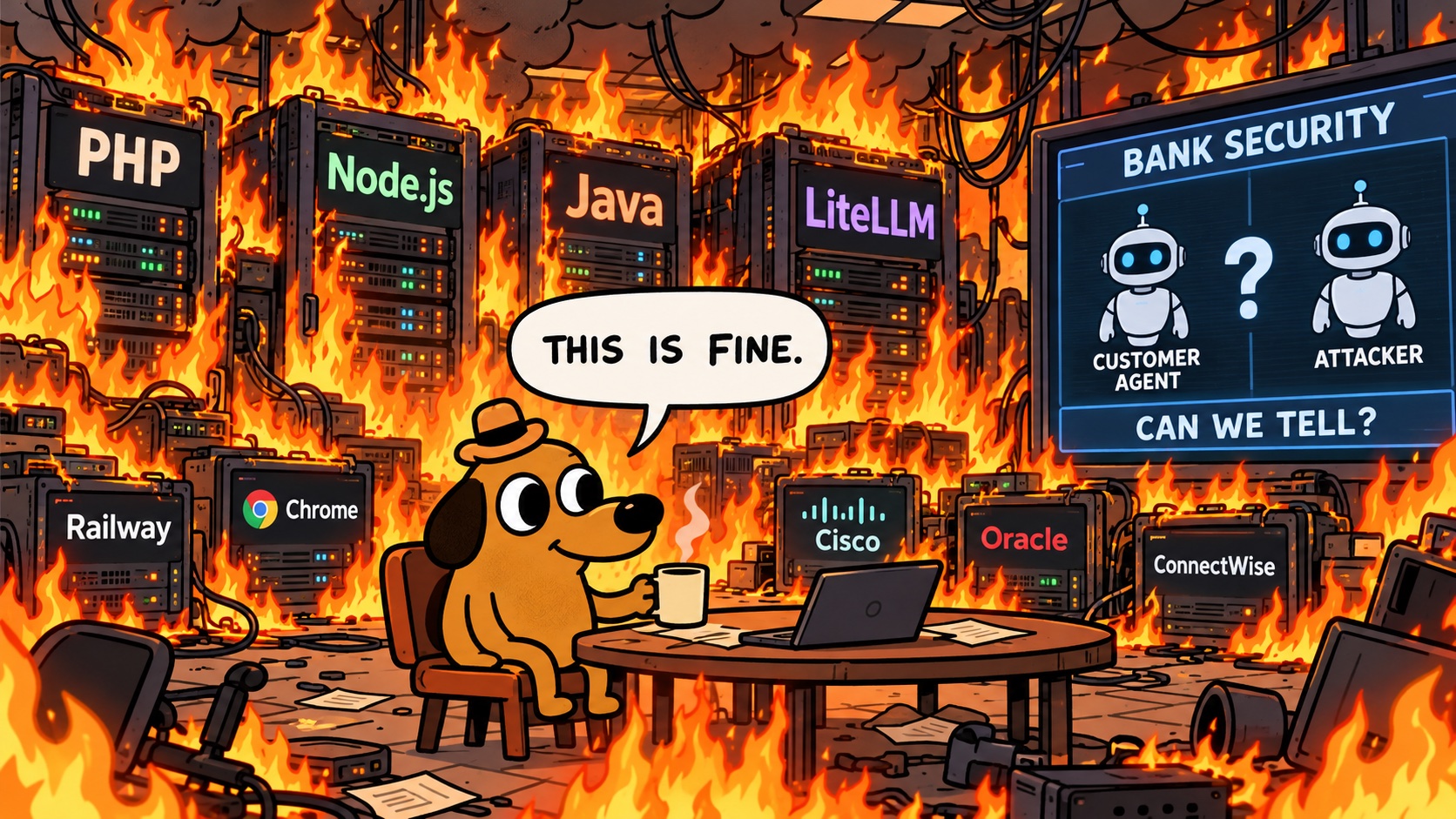
I woke up this morning to more security fires than I can remember seeing at once.
PHP, Node.js, Java, Oracle, LiteLLM, Railway, Chrome, Cisco, ConnectWise. Vulnerabilities, compromised releases, potentially exposed credentials.
My morning involved pinging Jeavio’s security team to identify which of our assets and portfolio companies needed attention, and also looking at my Wordpress sites and wondering whether my humble blog is now a vector for a hack.
I suspect plenty of CTOs, CIOs, and security folks are having a bit of a conniption today.
AI is already helping researchers find serious vulnerabilities. It is helping attackers too. Microsoft says a China-aligned group used an agentic AI framework to go after hundreds of organizations, and ties the ConnectWise compromise to the same campaign. Amazon saw attempts to exploit the new PHP bugs before they were even disclosed.
The time between discovery and disaster is shrinking.
Underneath all of it is the accumulated debt in the systems we’ve built: fragile dependencies, poor architecture, weak security practices, and critical infrastructure held together by people nobody has thought to fund properly. You know the XKCD cartoon - the one where all of modern digital infrastructure rests on one small project a lone volunteer has maintained for years. This week the PHP Foundation admitted that a fix for the underlying bug had stalled for months over decision-making and resources. That fragility was there long before AI. AI makes it cheaper to find and faster to exploit.
Years of “we’ll fix that later” are coming due.
Then there’s the Axios report about banks struggling to establish whether AI agents accessing accounts are acting with their customers’ authorization. A customer’s agent can look a lot like an intruder. Even customer-authorized access may break the bank’s rules. A Chase spokesperson told Axios that customers shouldn’t give their username and password to anyone. (But my Muse agent is so helpful!)
We need to design and operate for an adversarial environment. Verify who is acting, what they’re authorized to do, and what happens when they get it wrong. “It looks like normal user activity” is becoming a much less comforting answer.
There’s a personal side to mornings like this. Many of us, myself included, feel discombobulated about what it means to work in software and what comes next. Twenty-something years in, what our jobs look like changes almost weekly. An existential crisis to go with the midlife crisis. Excellent timing!
I remain a possibly delusional optimist about what AI can bring to our world. The way we work will change for the better, eventually.
But the transition is going to be painful professionally, personally, and operationally. Best to go into it with our eyes open.
In the meantime: this is fine.