The Two Drivers
AI promises transformation. Transformation of the way we work, possibly the way we live and the way we organize our societies. From the utopian dreamers to the doomers, everyone has an opinion of what the future will look like. I had a taste over the last couple of weeks.
I was in Atlanta. A short business trip. The usual beat: airport, hotel, conference room, Ubers back and forth. I had two conversations that have stuck with me.
The first was with a driver who had just finished a software engineering bootcamp. Whip smart, with an electrical engineering degree from Iran and a few years spent working as an interior designer in the United States. She wanted some stability and had taken a low interest loan from the (well-known) provider to cover tuition. The course was done and the payments were coming due soon. But only two of twenty people in her cohort had even found internships. She was still applying and was optimistic. We talked about career paths in software: product management, UX design, and the impact of AI. She was confident but her situation seems to echo what is happening across an entire cohort of young people looking for entry level work in software.
The next day, another Uber ride. A gregarious and easy going Dominican man who had been in the US for thirty years. He told me about how he wanted to work for a few more years. His son was about to start college. As we crawled through Atlanta rush-hour traffic, he talked about driving for Uber. About how the company had squeezed drivers. Apparently the cancellations I had been getting at Atlanta airport were drivers trying to game the surge algorithm. For my $70 ride, he told me he would get $25. The pricing rules kept changing, insurance got more expensive, and more and more drivers joined the fleet. Every day made it more difficult to make a living wage driving with Uber.
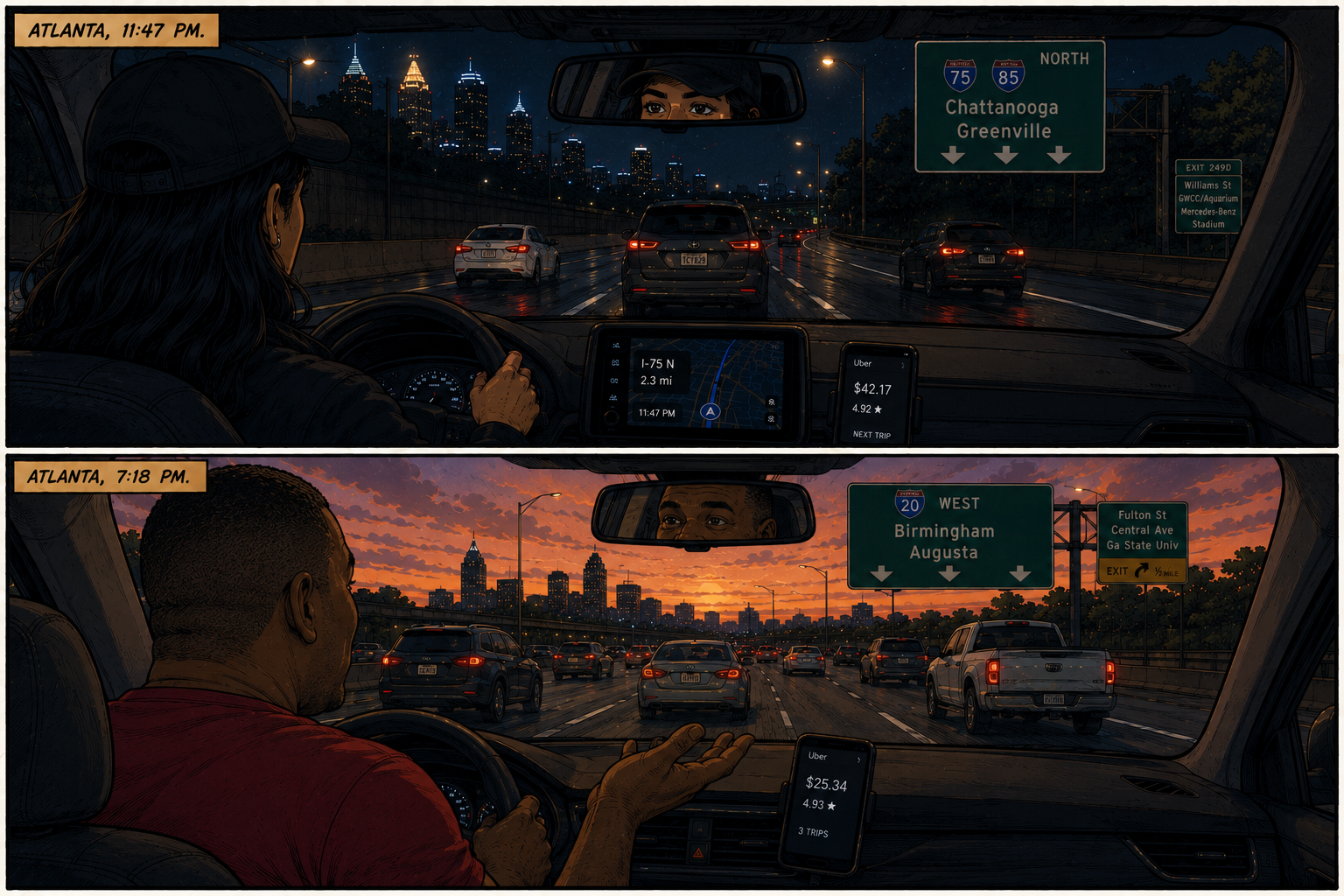
The first driver paid for a credential because she believed it would land her a stable career as a software engineer. The second was struggling to make a living in a job that the software had created.
These two conversations showed me what algorithms are already doing to the world.
The first driver is struggling to break into a field where entry level jobs are vanishing. LLM capabilities keep improving and code generating agents can do some entry-level work cheaper and more reliably than someone six months out of a bootcamp. The pathway that she trained for is getting difficult to get onto and may simply disappear in a few years.
The second driver showed me what happens when you live “under the API” where his work is mediated by an algorithm that adjusts his pay in real time, making it impossible to predict how much money he will take home when his shift is done. The algorithm is impossible to argue against. Uber resolutely calls drivers independent contractors. They are left to push back in the only ways available. Gaming the surge, swapping tips, and trying to pick up gigs delivering food during quiet hours.
The leaders at the frontier labs talk about a different future. Dario Amodei’s Machines of Loving Grace describes a century of biological progress compressed into a decade. Sam Altman’s Abundant Intelligence promises a factory producing a gigawatt of new AI infrastructure every week, framed as humanity’s path to cheap cures and personalized tutoring. Demis Hassabis describes his goal as understanding the universe.
These are some of the smartest people on the planet. Amodei and Hassabis appear to believe what they say.
The question is what happens when those utopian beliefs run up against the incentives of the capital that funds them. I’ve argued before that path dependence collapses individual conviction at the AI frontier. Winner-take-all dynamics produce convergent behavior regardless of stated worldview. Trillions of dollars of investment will get optimized for returns to the investor class. Human dignity is not the design objective.
The very near-term shape is the continuing Uber-ization of work for most of us. Credentialed pathways will close. More work will move “under the API.” The cruelest part of the trajectory is that the gig economy itself is likely to be temporary. The AI-powered “re-industrialization” of America and Europe will not result in plentiful, well-paying blue collar jobs. Instead, it will accelerate automation. Humanoid robots and autonomous vehicles will replace the very workers who look at the gig economy as a place of some respite from an unpredictable job market. In a decade or so, the second driver’s job goes away too.
There is a silver lining. As awareness builds, we will see pushback from society. We are seeing datacenter moratoriums and survey after survey showing just how unpopular AI is. Maybe we will see a push towards more regulation or a more considered approach to AI.
But against those initiatives is a trillion dollar wave of invested capital. And if we go by recent history, capital is in the driving seat against labor.
I wish both drivers well. A stable and well-remunerated career in software engineering for the first and a comfortable retirement for the second. But unless we see a significant change in our current trajectory, their future is uncertain (and so is mine).